Module 4 - EntreComp & Entrepreneurial Knowledge for Trainers

Brief description of the module

Module 3.1.4 will cover the topics A. “Deep Dive into the EntreComp Framework” and B. “Core Entrepreneurial Concepts (Trainer's Perspective)”. This module is designed for youth workers to gain familiarity with the EntreComp Framework, which provides a description of the necessary knowledge, skills, and attitudes to be entrepreneurial.

Understanding the EntreComp framework is crucial. The EntreComp framework is an excellent tool that helps youth workers structure interventions required to address specific technical and psychological deficiencies (or areas of opportunity) identified among young women entrepreneurs. It does this by mapping competency levels across key areas—such as the ability to plan, execute, and evaluate financial decisions and business plans for instance. This allows youth workers to pinpoint specific areas of opportunity. Topic B ensures youth workers gain the pedagogical perspective needed to confidently coach young women in acquiring and honing these core business skills. 

Overarching Questions:

  • How can youth workers leverage EntreComp's 15 competences across 8 progression levels to identify entrepreneurial skill and confidence gaps in young women?
  • What pedagogical techniques effectively translate complex financial and digital concepts into practical, confidence-boosting coaching strategies?
  • How does deep knowledge of entrepreneurial concepts empower young women to transform their ideas into value for others (financial, cultural, or social) ?

Objectives

The primary goals for the youth worker after completing this module are:

  • To improve their understanding on the use of the EntreComp Framework (15 competences across 8 progression levels) as a systematic tool to learn to identify specific entrepreneurial skills and confidence gaps in young women.
  • To acquire the necessary pedagogical knowledge and coaching methods to effectively mentor and train young women in core entrepreneurial concepts.
  • To develop the capacity to implement action-oriented mentorship that empower young women to transform their ideas into financial, cultural, or social value for others.
  • To leverage this core entrepreneurial knowledge to enhance the long-term guidance and technical assistance offered through local support points.

Learning Outcomes

Upon completing the module, youth workers will:

  • Understand the structure and application of the EntreComp Framework, including how its 15 competences and progression levels drive the transformation of ideas into value.
  • Systematically leverage the framework to identify and address specific entrepreneurial skill and confidence gaps among young women.
  • Structure interventions that target technical and psychological areas of opportunity, such as gaps in financial literacy, business planning, and digital marketing.
  • Apply specialized pedagogical techniques to translate complex financial and digital concepts into practical, confidence-boosting coaching strategies.
  • Utilize the module’s guidance to prepare and deploy ready-to-use materials on goal setting, action planning, and accessing resources.

A. Deep Dive into the EntreComp Framework

Concept Explanation

The EntreComp: The European Entrepreneurship Competence Framework is a key reference framework developed by the European Commission that was launched in 2016 as part of the New Skills Agenda for Europe. Its purpose is to clearly define and explain what it means to have an entrepreneurial mindset. EntreComp defines entrepreneurship as "The capacity to act upon opportunities and ideas, and transform them into value for others. The value that is created can be financial, cultural or social".

Concept Explanation and Purpose

EntreComp provides a comprehensive description of the knowledge, skills, and attitudes individuals need to be entrepreneurial and create value for others. It is a free and flexible reference framework that can be adapted to support the development and understanding of entrepreneurial competence in any setting.

EntreComp serves as a reference point for policy and practice across multiple sectors, supporting lifelong learning, active citizenship, innovation, employability, and entrepreneurial action. 

It helps:

  • Develop a shared language and understanding of entrepreneurial competence across various contexts.
  • Tailor entrepreneurial learning outcomes to specific contexts and create new or enhance existing teaching and learning activities.
  • Design activities that provide practical entrepreneurial experiences and help people understand how entrepreneurial they are.
  • Bridge the worlds of education and work, defining a competence that applies across all spheres of life, including personal development, active participation in society, employment, and starting ventures (commercial, cultural, or social).

The framework embraces various types of entrepreneurial activity, such as intrapreneurship (within large, established organisations), social entrepreneurship, green entrepreneurship, and digital entrepreneurship.

The Structure of the EntreComp Framework

EntreComp is structured around five key building blocks which collectively describe entrepreneurial competence and how proficiency can be measured:

The 3 Competence Areas (The Core Pillars)

The framework is built upon three interrelated and interconnected areas that mirror the definition of entrepreneurship as turning ideas into value-creating action:

  • IDEAS & OPPORTUNITIES: This area focuses on creative and innovative processes needed to identify, assess, and develop value-creating ideas.
  • RESOURCES: This area covers the motivation and resources required to pursue an idea, including securing necessary assets (material, non-material, personal, or financial).
  • INTO ACTION: This area relates to setting goals, planning, managing, dealing with uncertainty, and learning through experience.

The 15 Competences (The Building Blocks)

Each of the three competence areas contains five competences, totalling 15 competences that constitute the entrepreneurial mind-set:

Area Competence Description
IDEAS & OPPORTUNITIES 1. Spotting opportunities Identify and seise opportunities to create value.
2. Creativity Develop creative and purposeful ideas.
3. Vision Work towards your vision of the future.
4. Valuing ideas Make the most of ideas and opportunities.
5. Ethical and sustainable thinking Assess the consequences and impact of ideas, opportunities and actions.
RESOURCES 6. Self-awareness & self-efficacy Believe in yourself and keep developing.
7. Motivation & perseverance Stay focused and don’t give up.
8. Mobilising resources Gather and manage the resources you need.
Area Competence Description
9. Financial & economic literacy Develop financial and economic know-how.
10. Mobilising others Inspire, enthuse and get others on board.
INTO ACTION 11. Taking the initiative Go for it.
12. Planning & management Prioritise, organise and follow up.
13. Coping with uncertainty, ambiguity & risk Make decisions dealing with uncertainty, ambiguity and risk.
14. Working with others Team up, collaborate and network.
15. Learning through experience Learn by doing.

Figure 1. EntreComp competence areas (European Comission, 2025)

Threads and Learning Outcomes

Each of the 15 competences is further broken down into thematic threads, providing practical descriptions of what the competence means. The full framework contains approximately 60 threads in total.
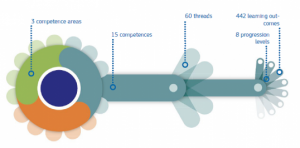
Figure 2. EntreComp competence areas (European Comission, 2025)

Associated with these threads are 442 learning outcomes. These learning outcomes define precisely "what a learner knows, understands and can do" after engaging in learning activities.

By following these specific learning outcomes, individuals (and those who guide them) can spot current strengths and weaknesses and identify precisely what is needed to reach the next level. This comprehensive list offers inspiration and insight for designing interventions.

The 8 Progression Levels (Mastery and Progress)

The learning outcomes are mapped across 8 levels of progression, ranging from beginner to expert. Mapping this progression is vital for tracking a learner's development over time and creating coherent skills pathways.

The progression model is split into four main groups, tracking increasing autonomy and responsibility (from relying on support to driving transformation) and the complexity of the environments dealt with:

Level Group Levels Focus of Progression
Foundation 1. Discover,

2. Explore

Creating value with external support. Focuses on discovering potential, recognising problems, developing individual and social skills.
Intermediate 3.Experiment,

4. Dare

Creating value with increasing autonomy and building independence. Focuses on critical thinking, experimenting with value creation, and turning ideas into action in ‘real life’.
Advanced 5. Improve, 

6. Reinforce

Taking responsibility. Focuses on improving skills, generating value using knowledge, and dealing with increasingly complex challenges.
Expert 7. Expand, 

8. Transform

Driving transformation, innovation and growth. Focuses on handling complex, constantly changing environments, developing new knowledge, and achieving excellence/transforming ways things are done.


Examples and Case Studies

Difficulties Young Female Entrepreneurs face in Catalonia, Spain 

Young Spanish women face acute structural barriers, including the country’s persistently high unemployment rate (11.4% overall in 2024, the highest in the EU) and resultant labor market disadvantages. Female youth unemployment (ages 25-29) is starkly higher, estimated to be 86% higher than men’s in that age bracket. 

Entrepreneurially, women struggle with financial literacy and managing finances, budgeting, and securing capital. This difficulty is aggravated by systemic bias in funding ecosystems, for example: only 5% of Catalan female entrepreneurs received external funding from investors, relying instead on personal funds and savings. 

Furthermore, women often face discriminatory questioning during pitches, being asked prevention-focused questions (focusing on risk and stability) while men are asked promotion-focused questions (focusing on potential gains), which typically results in receiving less funding. These factors limit ambition and restrict access to powerful informal networks. 

Using frameworks like the EntreComp to identify skill/confidence gaps and target specific learning outcomes (focusing on reflecting on individual strengths and weaknesses) can build resilience, a competence needed to navigate and counteract the discriminatory landscapes like the one in Spain. 

Difficulties Young Female Entrepreneurs face in Kosovo

Kosovo presents extreme structural exclusion, with female labour force participation among the lowest in Europe (approx. 21–22%). This results in a severe "brain waste" paradox where highly educated women cannot secure proportional economic rewards, leading to a massive potential growth dividend loss (23% of GDP). The universal and primary barrier is the disproportionate burden of unpaid care (6.2 hours daily), nearly double men's time, exacerbated by a severe lack of affordable Early Childhood Education and Care (ECEC) infrastructure.

Entrepreneurially, women own minimal assets (only 4.9% of land/businesses), critically hindering their ability to secure collateral for credit and formal financing. Despite possessing robust legal frameworks for gender equality, a significant "implementation gap" persists due to deeply entrenched patriarchal norms and insufficient institutional capacity.

To build resilience against this hostile systemic context, training must leverage the EntreComp framework. Mentorship targets resulting skill and confidence shortfalls: 'Financial and economic literacy' (Area 2: Resources) is vital for understanding budgeting and funding acquisition, while developing 'Self-awareness & self-efficacy' (Area 2: Resources) helps women reflect on strengths and acquire the motivation needed to overcome traditional societal pressure and risk aversion. This approach transforms ideas into social, cultural, or financial value.

Methodologies and Tools for Youth Workers

The following suggestions are a two-stage pedagogical process to coaching young female entrepreneurs: first diagnosing and planning, and then applying and mentoring. Youth workers can systematically leverage the EntreComp Framework to help young women build entrepreneurial skills by using the following a two-stage pedagogical process to coaching. 

1. Diagnosis and Planning 

EntreComp serves as a systematic tool for youth workers to identify skills and confidence gaps in young women by matching observed deficiencies to the 15 competences and their associated learning outcomes. For example: 

    • Addressing Technical Skill Gaps: If a young woman lacks skills in budgeting or funding acquisition, the youth worker focuses on the competence Financial and economic literacy (Area 2: Resources). 
    • Addressing Psychological Gaps: A persistent lack of confidence or fear of failure can be directly addressed using competences like Self-awareness & self-efficacy and Motivation & perseverance (Area 2: Resources). The youth worker can use the learning outcomes within these areas to pinpoint specific behaviours to develop, such as reflecting on individual strengths and weaknesses, or being resilient under pressure.
    • Targeting Soft Skills: Deficiencies in networking or leadership are addressed through Mobilising others (Area 2: Resources) and Working with others (Area 3: Into Action).

By using the 8 progression levels, youth workers can measure a young woman's level of proficiency and tailor coaching strategies to help her master the skills required for the next level, moving systematically from relying on support (Foundation) toward greater autonomy (Intermediate). For example by: 

2. Mentoring for leveraging competences in the real world

The ultimate goal of youth workers in using EntreComp is to empower young women to transform their ideas into value for others—whether financial, cultural, or social. Youth workers can facilitate this real-world application through action-oriented mentorship:

  • Focus on Value Creation: Youth workers guide young women to frame their entrepreneurial efforts around creating measurable value. For instance, tackling a community challenge.
  • Building Resilience through Action: By guiding young women to approach decisions despite uncertainty (Coping with uncertainty, ambiguity & risk - Area 3: Into Action) and persevere despite setbacks (Motivation & perseverance - Area 2: Resources), youth workers ensure they apply these psychological competences directly in the face of real-world challenges, such as dealing with resistance to innovative ideas or securing funding.
  • Designing Training: Youth workers can incorporate EntreComp insights when teaching about goal setting, and accessing resources through coaching strategies designed to boost confidence and application. 

Reflection Questions 

  • Considering the "Diagnosis and Planning" stage, how might you use the 15 competences and 8 progression levels to create a personalised development plan for a young woman who has a strong idea but is hesitant to take the first step due to fear of failure?
  • The "Mentoring for leveraging competences" stage emphasises creating real-world value. What is one concrete, small-scale project you could facilitate that would allow a young entrepreneur to simultaneously practice "Coping with uncertainty" and "Mobilising others"?
  • Reflecting on the entire process, what potential challenges do you foresee in moving a young woman from a structured, competency-based plan (Stage 1) to autonomous, real-world application (Stage 2), and how could you adapt your coaching style to bridge this gap?

B. Core Entrepreneurial Concepts (Trainer’s Perspective)

Concept Explanation

The development of entrepreneurial capacity is crucial for all citizens to act upon opportunities and ideas, and transform them into value for others—whether that value is financial, cultural, or social. For youth workers mentoring young female entrepreneurs, these basic concepts must be taught through a tailored, action-oriented lens that builds both skills (knowledge, know-how) and confidence.

The training methodology should adopt a pedagogical perspective, positioning the youth worker as a coach and facilitator rather than a lecturer. This approach directly addresses the pervasive psychological barriers identified in young women, such as the lack of self-confidence and fear of failure. 

Basic Financial Literacy

Financial literacy is defined as the knowledge needed to make smart decisions with money, including budgeting, saving, and understanding loan terms. Young women entreprenerus consistently cite financial illiteracy and managing finances as a key skill gap. EntreComp Alignment: This topic directly aligns with the competence Financial and economic literacy (Area 2: Resources).

  • Core Concepts: 
    • Income and Expenses: Youth workers should begin by clarifying basic terminology related to money and economic concepts. Entrepreneurs must differentiate between income (money received) and expenses (money spent), categorising expenses as fixed (e.g., rent, loan payments) or variable (e.g., mobile data, materials).
    • Budgeting: This is the tool used to plan the use of income and expenses. Youth workers should teach practical tools like templates to help estimate the cost of turning an idea into a value-creating activity and evaluate financial decisions over time.
    • Saving and Investing: Mentoring should focus on helping women develop financial know-how to ensure their value-creating activity can last over the long term. This involves intentionally setting aside profits and reinvesting them, as financial literacy is often missed by new entrepreneurs, hindering long-term wealth creation.

Youth workers can use practical budgeting templates and financial scenario planning exercises. Since women often underreport their actual financial knowledge due to lower confidence (self-efficacy), training must actively tackle negative stereotypes and promote financial knowledge specific to expanding business ownership.

Basic Business Planning

A business plan is a strategic roadmap detailing a company's goals and the methods to achieve them. It is essential for securing funding and ensuring the business stays aligned with its growth objectives. EntreComp Alignment: This relates to the competence Planning and management (Area 3: Into Action). This skill helps define priorities and action plans.

  • Core Concepts: 
    • Goals and Vision: Entrepreneurs need to set clear long-, medium-, and short-term goals. Youth workers should encourage the articulation of an entrepreneurial vision to turn ideas into action.
    • Essential Components: The plan should cover the business background, production/operational plan, marketing plan, financial plan (including pre-operational expenses and required borrowing), and risk assessment.
    • Simplified Planning: For startups and new entrepreneurs, the process does not need to be complicated. Youth workers can introduce models like the Lean Startup Plan or the Business Model Canvas to quickly define key sections, such as the value proposition, resources, and customer segments.

Training materials should be action-oriented, providing templates for SMART goal setting and guiding participants to write a business plan for their idea. Youth workers must emphasise the importance of using the plan as a dynamic document, updating it regularly to adapt to changing market conditions.

Basic Digital Marketing (Personal Brand) Applied to Entrepreneurship

Young women entrepreneurs identify gaps in digital literacy, online marketing, and content creation as obstacles to converting visibility into sales. EntreComp Alignment: This links to Mobilising resources (for digital competences and tools), Valuing ideas (recognising the potential of an idea for creating value), and Mobilising others (demonstrating effective communication and persuasion).

  • Core Concepts: 
    • Online Presence and Branding: This involves defining target audiences and creating content that clearly communicates the value of the product or service. Youth workers should provide strategies for social media use and basic e-commerce functionality.
    • The Elevator Pitch: This is a crucial communication skill used to persuade and inspire stakeholders, requiring clarity and enthusiasm. Youth workers should train women in effective communication and negotiation skills.
    • Digital Safety: Youth workers must address the need to protect assets and personal information, advising on separating business and personal social media to manage digital risk.

Youth workers can use ready-to-use templates for digital marketing plans and interactive exercises, such as practicing elevator pitches. This helps young women overcome confidence barriers related to presenting their ideas to investors or funding bodies.

Basic Legal/Administrative/Tax Aspects Related to Entrepreneurship

Entrepreneurs must navigate complex administrative and bureaucratic requirements. The lack of clear information on legal requirements, business registration, and taxes is a frequently cited need. EntreComp Alignment: This falls under the competence Mobilising resources, which includes acquiring and managing necessary legal and tax competences, and Ethical and sustainable thinking (reflecting on responsibility and long-term goals).

  • Core Concepts: 
    • Legal Structure and Registration: Understanding the ownership model (e.g., sole proprietorship vs. limited company) and the legal/financial responsibilities associated with the chosen structure is essential. Youth workers should help identify local procedures for business registration, permits, and contracts.
    • Taxation: Youth workers must explain the purpose of taxation—that it finances government activities and services like hospitals and schools. Entrepreneurs must estimate their main accountancy and tax obligations to meet the legal requirements for their business.

To address the demand for centralised support, youth workers should utilise and contribute to "Resource Hubs" that compile country-specific information on official government portals, funding bodies, and legal/financial advisory services. This localisation ensures the advice is practical and relevant to the demanding regulatory environment. Youth workers need training in cultural competency and understanding gender dynamics to address biases related to legal navigation and financial access.

To solidify this holistic approach, imagine the entrepreneurship journey as building a house. Financial literacy provides the stable, deep foundation (budgeting, managing funds), ensured by the bedrock of the Legal/Administrative framework (getting necessary permits and zoning approval). The Business Plan acts as the architectural blueprint (defining goals, materials, and steps). Finally, Digital Marketing and Personal Brand represent the exterior—the visible design and communication that attracts clients and investors to step inside, converting curiosity into financial value.

Examples and Case Studies

The Nordic paradox: Young Female Entrepreneurs in Norway 

Incorporate local case studies and practical examples relevant to country-specific socioeconomic and cultural contexts. This addresses the need for cultural relevance and concrete illustrations.

2 case studies, 1000 characters each

Norway, a global leader in gender equality, exhibits a "Nordic paradox" where female entrepreneurship is surprisingly low, accounting for less than 4% of new businesses in 2021. Despite women achieving high educational attainment (60% of degrees), deep gender segregation persists; women cluster in care sectors while men dominate high-paying STEM/ICT fields. This results in limited access to crucial networks. The primary barrier for aspiring female entrepreneurs is financing, cited as the biggest challenge by nearly 40% of women. They often feel excluded from informal, male-dominated professional networks and report not being taken seriously, particularly in technology sectors.

Targeted mentoring show systematically equip young women with technical knowledge to facilitate growth. For young entrepreneurs’ to overcome financial anxiety involves focusing teaching Financial literacy and giving tools tackñe funding barriers. This requires pedagogical techniques that teach technical skills (e.g., business planning, digital marketing) while simultaneously building psychological competences like Self-awareness & self-efficacy and resilience (from the EntreComp framework) to accelerate the transformation of ideas into financial value.

Difficulties Young Female Entrepreneurs face in Greece

Greece lags significantly in gender equality, ranking 25th in the EU, despite achieving near parity in tertiary education and ranking highly for women graduating from STEM fields. This paradox of high attainment and limited reward is fueled by structural inequalities: the female full-time equivalent employment rate is 36% (20 points below men's). Critically, Greek women bear one of the widest unpaid care burdens in the EU, spending 2 hours and 21 minutes more per day on domestic work than men, cited by 28% of working-age women as the primary reason for staying out of the labour force. This reinforces a "male breadwinner" model and directs women towards "feminised," lower-paying sectors.

Entrepreneurially, young women face high youth unemployment (57% higher than men aged 25-29), significant hurdles accessing finance, and exclusion from professional networks, resulting in only 16% of Greek startups having a woman in their founding team. To address this, coaching must be gender-responsive. 

Technical coaching should strengthens Planning and management (Area 3: Into Action) to aid navigation of complex bureaucratic requirements. Crucially, training enhances Mobilising resources for digital literacy, online marketing, and establishing a robust digital presence the resilience needed to challenge pervasive cultural norms and transforms ideas—such as those found in social enterprises like WEnCoop (Greece’s first women-centred social energy cooperative)—into value.

Methodologies and Tools for Youth Workers

Youth workers serving as mentors must adopt a gender-responsive and participant-centred pedagogical approach. The goal is to act as a coach or facilitator who builds both technical skills (knowledge, know-how) and confidence. This systematic process is anchored in the EntreComp Framework.

Youth workers can leverage EntreComp's 15 competences to identify deficiencies (e.g., lack of Self-awareness & self-efficacy or low Financial & economic literacy) and structure interventions based on learning outcomes. Training materials must be practical and action-oriented, providing clear, step-by-step guidance.

Specific Coaching and Training Techniques

  1. Basic Financial Literacy

This addresses the need to develop Financial and economic literacy (Area 2: Resources), as many young women lack know-how in budgeting and funding access.

  • Pedagogical Approach: Start by clarifying basic terms like Income (money received) and Expenses (money used). Use practical budgeting templates and financial scenario planning exercises where entrepreneurs differentiate fixed versus variable costs. Teach that taxes finance government services like hospitals and schools.
  • Core Concepts: Financial literacy includes estimating costs, planning and evaluating financial decisions over time, and managing financing for long-term value creation. Saving effectively involves setting specific long-term goals and breaking them into short-term steps.
  1. Basic Business Planning

This builds the competence Planning and management (Area 3: Into Action).

  • Pedagogical Approach: Emphasise learning by doing and project work, encouraging students to define their own objectives and plan. Youth workers should introduce simplified models like the Business Model Canvas to help structure the venture. Training focuses on Goal Setting and Action Planning, providing templates for SMART goals (Specific, Measurable, Achievable, Relevant, Time-bound).
  1. Basic Digital Marketing (Personal Brand)

This links to Mobilising resources (digital competences) and Mobilising others (communication, persuasion).

  • Pedagogical Approach: Address skill gaps in digital literacy and online presence. Provide ready-to-use templates for digital marketing plans and brand guidelines. Use interactive exercises to practice presenting the value proposition. Techniques include practising the concise "elevator pitch" (through video submissions or presentations) to improve effective communication and persuasion.
  1. Basic Legal/Administrative/Tax Aspects

This relates to Mobilising resources, covering technical, legal, and tax competences.

  • Pedagogical Approach: Address the demand for centralised support and clear guidance on legal requirements, business registration, and taxes. Youth workers should utilise "Resource Hubs" that compile country-specific links to official government portals, funding bodies, and legal/financial advisory services. This practical approach helps the entrepreneur define legal structure and estimate tax obligations.

Reflective Prompts for Youth Workers

    • How can you ensure that training on Financial and economic literacy directly addresses the psychological barrier of risk aversion often observed in young women, rather than just providing technical facts?
    • If a young entrepreneur struggles with the Planning and management of her business, which soft skill—such as Motivation & perseverance or Working with others—might be the underlying competence gap that needs coaching?
    • How does helping a young entrepreneur develop an effective Digital Marketing plan for her personal brand directly contribute to building her Self-awareness & self-efficacy?
    • Describe specific mentoring, coaching, and training techniques youth workers can use.

Application and Practice

Reflective Prompts ("Food for Thought")
  • Research shows women may underestimate their Financial and economic literacy, impacting their confidence. How will you structure coaching on financial planning (budgeting, forecasting) to simultaneously build the competence Self-awareness & self-efficacy in a way that directly counters this ingrained self-doubt?
  • The disproportionate burden of unpaid care and persistent youth unemployment are external barriers. How can you mentor a young woman to strengthen her Motivation & perseverance and Coping with uncertainty, ambiguity & risk without minimizing the reality of these systemic hurdles?
  • Young women often lack access to powerful, male-dominated informal networks. If an entrepreneur's deficiency is mapped to Mobilising others, what concrete, action-oriented strategy would you teach them to effectively build and leverage connections in a non-inclusive, gender-segregated environment?

EntreComp defines entrepreneurship as acting upon ideas to transform them into value for others (financial, cultural, or social). An entrepreneur fails to secure initial investment. Using Learning through experience, how do you help her reframe that temporary setback as a valuable, measurable learning outcome that informs her updated Planning & management strategy?

Practical Exercises for Youth Workers

The following two tasks require youth workers to apply their theoretical knowledge of the EntreComp Framework and gender-responsive coaching techniques to address specific challenges faced by young female entrepreneurs, drawing on identified socio-economic and cultural hurdles.

Task 1: Designing a Resilience-Focused Mentoring Intervention (Psychological & Cultural Barriers)

Scenario: A young woman entrepreneur (A) in Greece, who has secured seed funding for her innovative social enterprise (e.g., a women-centred energy cooperative, WEnCoop), is struggling with profound self-doubt and fear of public failure. Her motivation is high, but she reports intense familial and societal pressure to pursue a "stable job", making the prospect of publicly failing unbearable.

Challenge: Design a structured, 30-minute one-on-one mentoring session plan focusing on overcoming this psychological barrier and mitigating external pressure.

Required Action:

  1. Identify the two most critical EntreComp competences (from the Resources or Into Action areas) currently deficient, explaining why they are crucial in this scenario (e.g., lack of belief in her ability despite setbacks or inability to handle risk).
  2. Detail three specific pedagogical techniques to be used in the session. These techniques must build her confidence and resilience, rather than just providing advice. For instance, how would you use reflection to help her reframe the risk of failure as a Learning through experience opportunity (EntreComp 3.5)?
  3. Explain how the session reinforces the competence Self-awareness & self-efficacy (EntreComp 2.1) by explicitly addressing the Greek socio-cultural norm that favours secure employment, thereby empowering her to maintain focus and persevere.

Task 2: Adapting a Financial Literacy Workshop to Counter Systemic Bias (Technical & Socio-Economic Barriers)

Scenario: You are leading a training session in Spain, where young female entrepreneurs cite financing as a universal and significant obstacle. Research confirms a systemic bias where women receive prevention-focused questions during pitches, resulting in less funding.

Challenge: Design a 60-minute segment of a Financial Literacy workshop focused on Financial and economic literacy (EntreComp 2.4) and Mobilising resources (EntreComp 2.3). The training must equip women with the technical know-how to confidently tackle investment bias and navigate complex Spanish bureaucracy.

Required Action:

  1. Define the specific learning outcome for this segment (e.g., moving beyond drawing up a simple budget to mastering financial forecasting to demonstrate long-term sustainability).
  2. Describe one practical, action-oriented activity that requires the use of templates (e.g., planning a cash-flow analysis or profit-and-loss account exercise). Explain how mastering this technical skill directly counters the systemic funding bias by providing evidence to withstand risk-averse questioning.
  3. Detail how you will use this technical module to support Mobilising resources (EntreComp 2.3) by addressing the fragmentation of information. This must include identifying and signposting one specific type of country-specific resource (e.g., links to government portals, grants, or legal/tax advisory services) that must be included in the training materials.
Discussion Forums/Group Activities

A young entrepreneur shows high motivation (EntreComp 2.2) but struggles severely with pitching to investors due to a lack of confidence. Discuss how you would coach her in Financial and economic literacy (EntreComp 2.4) using action-oriented, practical materials while intentionally strengthening her Self-awareness & self-efficacy (EntreComp 2.1). Share a specific participatory technique you use to reframe the fear of failure.

Module Summary and Resources

Key Takeaways

The module provides youth workers with the foundational tools to deliver gender-responsive and action-oriented entrepreneurship coaching:

  • EntreComp as a Diagnostic Tool: The European Entrepreneurship Competence Framework (EntreComp) serves as a systematic tool for youth workers to identify specific skill and confidence gaps in young women entrepreneurs.
  • Structure and Scope: EntreComp defines entrepreneurship as the capacity to transform opportunities and ideas into financial, cultural, or social value for others. It consists of 15 competences across 3 areas: Ideas & Opportunities, Resources, and Into Action.
  • Measuring Development: Competence development is mapped across 8 progression levels, ranging from Foundation (relying on support) to Expert (driving transformation, innovation, and growth).
  • Addressing Gender Barriers: The framework is leveraged to counter identified deficiencies among young women, such as low Financial & economic literacy (Area 2: Resources) and lack of Self-awareness & self-efficacy (Area 2: Resources).
  • Core Technical Skills: Training focuses on fundamental entrepreneurial concepts from a pedagogical perspective, including Basic Financial Literacy (e.g., budgeting, financial forecasting), Basic Business Planning (e.g., using the Business Model Canvas), and Basic Digital Marketing (e.g., personal branding, effective pitching).

Action-Oriented Coaching: The module guides youth workers to move beyond theory to implement practical, action-oriented mentorship that fosters resilience and applies psychological competences (like Coping with uncertainty, ambiguity & risk) in real-world scenarios.

Scroll to Top
Skip to content