Article 1. Focus Groups
Focus Groups

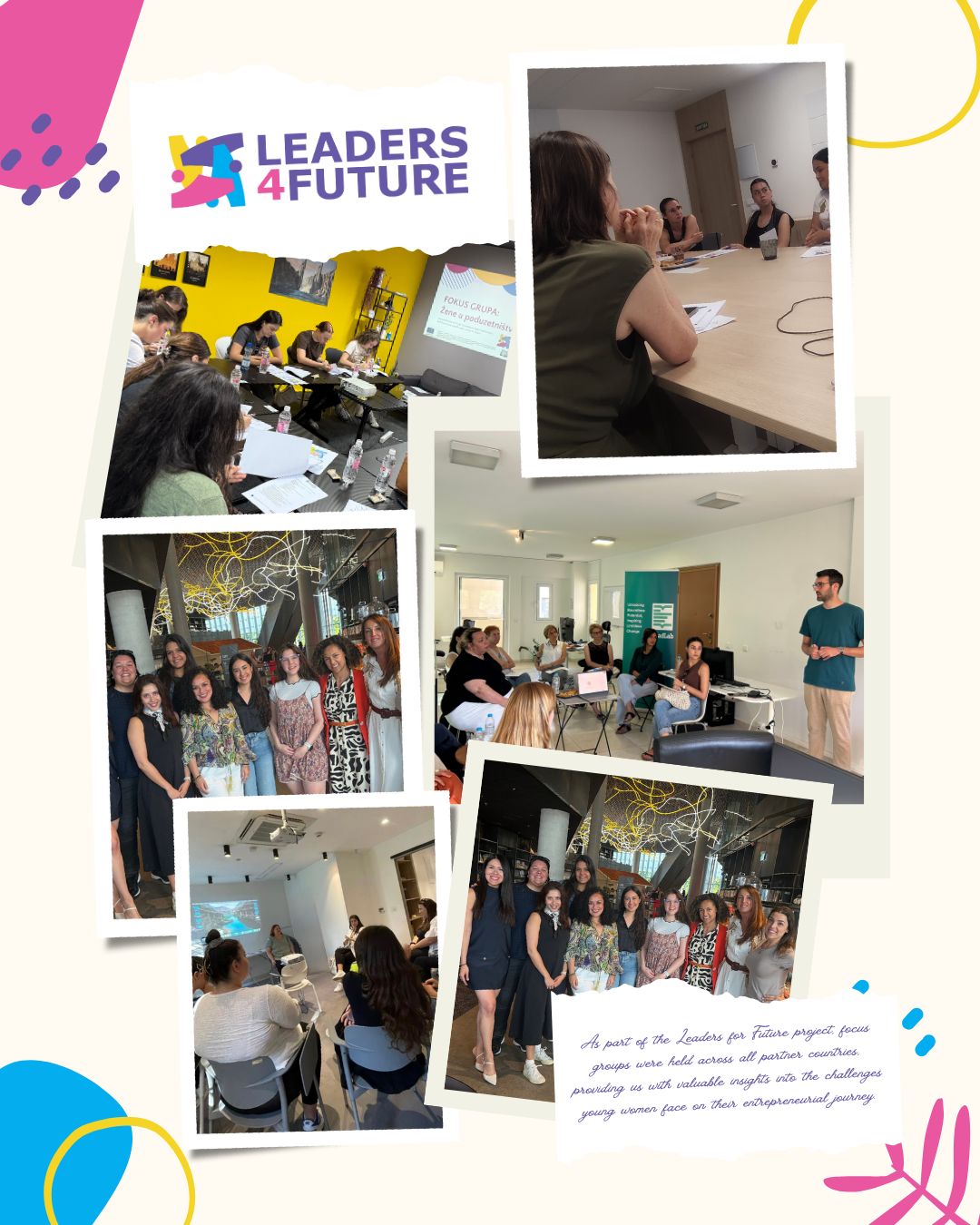
June 2025 - Focus Groups Across Europe: Understanding the Real Challenges of Young Women Entrepreneurs

In summer 2025, the Leaders for Future project held focus groups in seven countries. The goal was simple: listen to young women entrepreneurs and learn what they really need.


Across Europe and the Western Balkans, many youth professionals are highly motivated. But they often lack structured tools, methodologies, and practical resources to support young women in entrepreneurship effectively.

The Leaders for Future project wanted to change that. But first, we needed to understand the real situation on the ground.

That is why we organised focus groups in Spain, Greece, Norway, Kosovo, Albania, Montenegro, and Bosnia and Herzegovina.

Who Took Part?

We spoke directly with 70 young women aged 18 to 30 who are either already running a business or thinking about starting one.

Their voices and experiences became the foundation of our work.

What Did We Learn?

The focus groups gave us clear insights into what motivates young women and what holds them back.

Main motivations:

  • Desire for independence and creativity
  • Rejection of unstable or low-quality jobs

Main barriers:

  • Lack of funding – mentioned by 76% of participants
  • Bureaucratic obstacles and complex paperwork – 63%

Most requested support:

  • Mentoring from experienced entrepreneurs
  • Networking opportunities to connect with others

These findings confirmed that young women have the drive and the ideas. What they lack is access to money, clear guidance, and supportive networks.


How Did We Use This Knowledge?

The insights from the focus groups helped us in two important ways.

First, we used them to build a more precise Self-Assessment Tool. This tool is designed to help young women evaluate their entrepreneurial readiness. It allows users to reflect on their strengths and identify areas where they may need further development.

You can access the Self-Assessment Tool here:
👉 https://leaders4future.eu/self-assessment/

Second, the focus group findings became the basis of a full research report.

Why This Matters

The focus groups were not just about collecting data. They were about listening to young women and letting their experiences guide the project.

Thanks to their contributions, we now have:

  • A better understanding of national support systems across seven countries
  • A practical Self-Assessment Tool for young entrepreneurs
  • A research report that can inform youth workers, policymakers, and organisations

Learn More

The Leaders for Future project continues to develop resources for youth workers and young women entrepreneurs across the Western Balkans and beyond.
📲 Follow us on Instagram: @leaders4future
CERTIFICATE TEST

1. How does the role of a youth worker in mindset empowerment differ from that of a technical advisor?
2. Which of the following progression levels is primarily characterised by the learner Taking Responsibility for making decisions and working with others?
3. Which of the following is not aligned with Gender-Responsive Design principles?
4. The entrepreneurial ecosystem is limited to business investors
5. What is the primary reason for the “confidence gap” observed among young women entrepreneurs?
6. Is intersectionality concerned with how multiple identities—such as gender, class, and disability—combine to shape an individual’s experience?
7. When coaching young female entrepreneurs, youth workers should generally advise separating business and personal social media accounts to manage digital risk
8. What is a key benefit of ecosystem mapping for youth workers?
9. During the “Cultivation” phase of a mentoring relationship, what is the main goal?
10. Which of the following best describes the main purpose of Module 1?
11. Can youth workers act as advocates for gender-inclusive entrepreneurship policies?
12. Which competence is focused on reflecting on individual strengths and weaknesses and believing in one's ability to influence the course of events, despite setbacks?
13. The module describes “Imposter Syndrome” as a specific obstacle for women entrepreneurs. What does this term refer to?
14. Which method helps youth workers build confidence and resilience in young women?
15. Communication for empowerment primarily aims to
16. According to the training material, what is the primary purpose of taxation for a country's government activities?
17. Empathy is a key component of Emotional Intelligence. In a business context, what does empathy enable an entrepreneur to do?
18. Gender-Responsive Design focuses only on women’s access to finance, not on social or psychological barriers
19. Policy awareness has little relevance for youth work
20. How many core competence areas does the EntreComp framework identify?
[field id="form_name"]
[field id="form_date"]

Please do not use accents or other special characters

TEST CERTIFIKATA

1. Po čemu se uloga omladinskog radnika u osnaživanju načina razmišljanja razlikuje od uloge tehničkog savjetnika?
2. Koji od sljedećih nivoa progresije prvenstveno karakterizira preuzimanje odgovornosti učenika za donošenje odluka i saradnju s drugima?
3. Koje od sljedećeg nije usklađeno s principima rodno odgovornog dizajna?
4. Preduzetnički ekosistem je ograničen na poslovne investitore
5. Koji je glavni razlog za „jaz u samopouzdanju“ koji se uočava među mladim ženama poduzetnicama?
6. Da li se intersekcionalnost bavi time kako se višestruki identiteti - poput roda, klase i invaliditeta - kombiniraju kako bi oblikovali iskustvo pojedinca?
7. Prilikom podučavanja mladih žena poduzetnica, omladinski radnici bi uglavnom trebali savjetovati odvajanje poslovnih i ličnih računa na društvenim mrežama kako bi se upravljalo digitalnim rizikom
8. Koja je ključna korist od mapiranja ekosistema za omladinske radnike?
9. Tokom faze „Njegovanja“ mentorskog odnosa, koji je glavni cilj?
10. Koja od sljedećih tvrdnji najbolje opisuje glavnu svrhu Modula 1?
11. Mogu li omladinski radnici djelovati kao zagovornici rodno inkluzivnih poduzetničkih politika?
12. Koja kompetencija je usmjerena na promišljanje o individualnim snagama i slabostima i vjerovanje u vlastitu sposobnost utjecaja na tok događaja, uprkos neuspjesima?
13. Modul opisuje „Sindrom varalice“ kao specifičnu prepreku za žene poduzetnice. Na šta se odnosi ovaj termin?
14. Koja metoda pomaže omladinskim radnicima da izgrade samopouzdanje i otpornost kod mladih žena?
15. Komunikacija za osnaživanje prvenstveno ima za cilj
16. Prema materijalima za obuku, koja je primarna svrha oporezivanja vladinih aktivnosti neke zemlje?
17. Empatija je ključna komponenta emocionalne inteligencije. U poslovnom kontekstu, šta empatija omogućava poduzetniku?
18. Rodno osjetljiv dizajn fokusira se samo na pristup žena finansijama, a ne na društvene ili psihološke barijere
19. Svijest o politici ima malo veze s radom s mladima
20. Koliko ključnih područja kompetencija identificira EntreComp okvir?
[field id="form_name"]
[field id="form_date"]

Molimo vas da ne koristite dijakritičke znakove ili druge posebne znakove

Scroll to Top
Skip to content