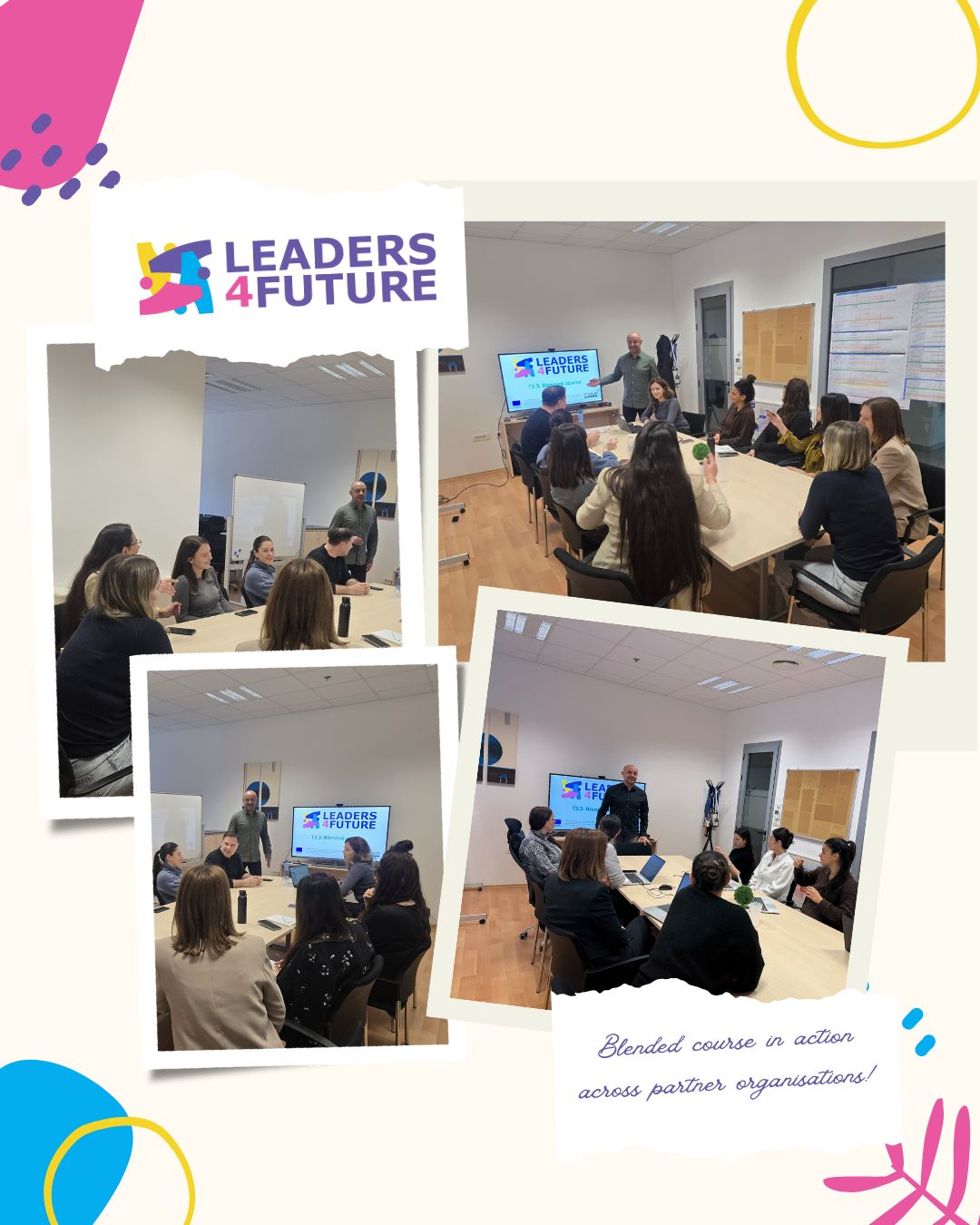
February 2026: Blended Learning Course: Strengthening Youth Workers Across the Western Balkans
During the first months of 2026, the Leaders for Future consortium successfully recruited 71 participants for its 30-hour blended learning course. The course was designed for youth workers, educators, mentors, and trainers from seven countries.
A Practical Course for Youth Workers
The course was implemented across partner organisations in Spain, Greece, Norway, Kosovo, Albania, Montenegro, and Bosnia and Herzegovina. It combines online learning with practical sessions and peer exchange.
The goal is simple: equip youth workers with the tools, methods, and confidence to better mentor young women, encourage entrepreneurial thinking, and promote inclusive opportunities in their communities.
Course Structure
The 30-hour blended learning course is structured to facilitate knowledge transfer and practical application. It includes:
- Introductory and final sessions
- Self-paced online modules
- Two live online meetings for questions and discussion
The self-paced online modules correspond to the materials from the Online Course for Youth Workers, which anyone can access for free. This structure accommodates different learning styles and encourages active participation. Participants can learn at their own pace while still having opportunities to connect with trainers and peers.
What Participants Gain
The course helps youth workers develop the skills they need to support young women entrepreneurs effectively. Topics include:
- Mentoring techniques tailored to young women's needs
- Practical tools for fostering entrepreneurial thinking
- Gender-sensitive approaches to business support
- Building inclusive opportunities in local communities
By completing the course, participants gain both knowledge and practical methods they can apply immediately in their daily work.
Building Stronger Support Systems
The blended course is one of the core activities of the Leaders for Future project. By strengthening the skills of youth workers, the project is creating stronger support systems for the next generation of women entrepreneurs and changemakers across the Western Balkans and beyond.
Youth workers who complete the course are better prepared to help young women turn their ideas into real businesses. They can offer guidance on everything from business planning to building confidence and overcoming personal barriers.
🔗 Access the free Online Course for Youth Workers: https://leaders4future.eu/project-results/online-course/