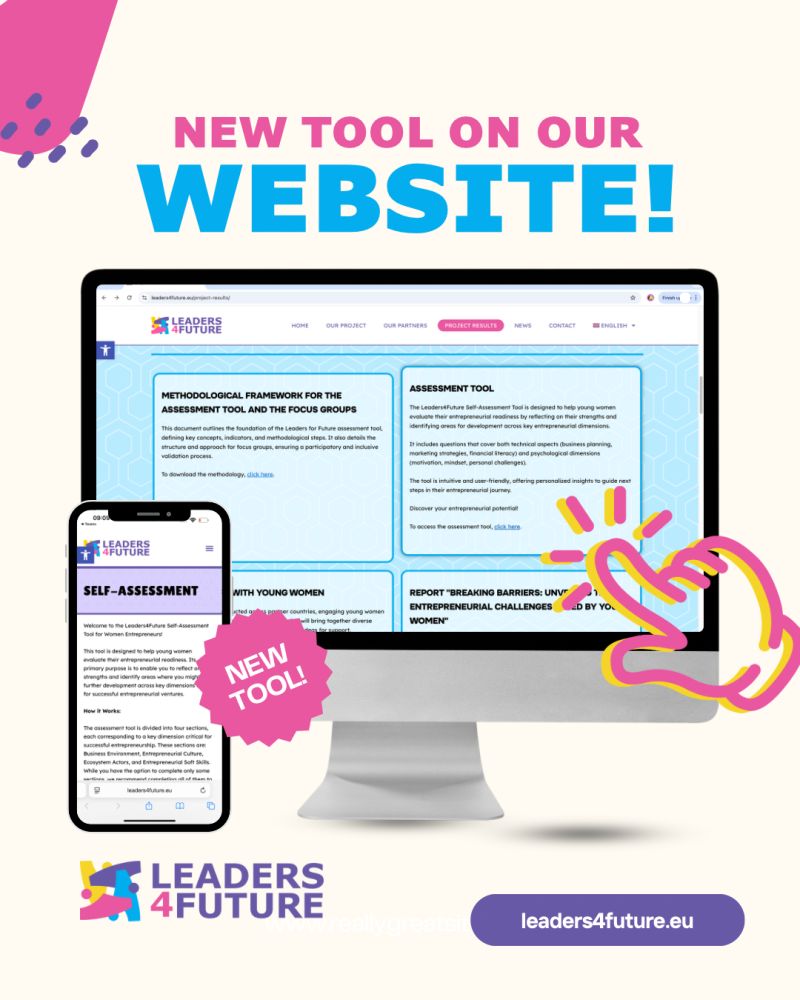
July 2025- Self-Assessment Tool: Helping Young Women Understand Their Entrepreneurial Strengths
A free, practical tool for young women in the Western Balkans and beyond to assess their readiness to start and grow a business.
Why a Self-Assessment Tool?
Many young women have great business ideas. They are motivated, creative, and eager to work independently. However, they often do not know where to start or lack confidence in their skills. The Leaders for Future project created this Self-Assessment Tool to help young women reflect on their entrepreneurial strengths and identify areas for further development.
How Was the Tool Developed?
The tool is based on real experiences shared by young women entrepreneurs during focus groups in summer 2025. These focus groups took place in Spain, Greece, Norway, Kosovo, Albania, Montenegro, and Bosnia and Herzegovina. We spoke directly with 70 young women aged 18 to 30 about their motivations, challenges, and support needs. Their feedback shaped a tool that is practical, relevant, and useful across different contexts.
What Does the Tool Cover?
The tool addresses two broad dimensions of entrepreneurship:
Technical aspects:
- Business planning
- Marketing strategies
- Financial literacy
- Managing resources
Psychological dimensions:
- Motivation and drive
- Entrepreneurial mindset
- Personal challenges and coping strategies
- Confidence and self-belief
By covering both areas, the tool gives a complete picture of entrepreneurial readiness.
How Does It Work?
The tool is intuitive and user-friendly. Young women answer questions about their current skills, knowledge, and attitudes. At the end, they receive personalised insights to help them understand their strengths, areas needing attention, and next steps. This is not a test. It is a reflective tool designed to guide and support.
Who Is It For?
The tool is for young women thinking about starting a business, those who already have a business and want to grow, and youth workers or mentors helping young women assess their readiness.
The Bigger Picture
The Self-Assessment Tool is one part of the Leaders for Future project, which builds stronger foundations for young women entrepreneurs by:
- Strengthening youth workers' professional competences
- Promoting gender-sensitive mentoring
- Supporting local support points for young women
- Fostering collaboration across partner countries
How to Access the Tool
The Self-Assessment Tool is free and available online.